Kettler and Yingling, The Once and Future Cow
Most histories focus on humans, but what if we expanded the range of historical actors? How does researching the environment or animals change how we think about the past and our future on Earth? Environmental historians and scholars working in fields like animal studies do just that. This Earth Month, our guests ask us to consider a history focused on animals, specifically, cows.
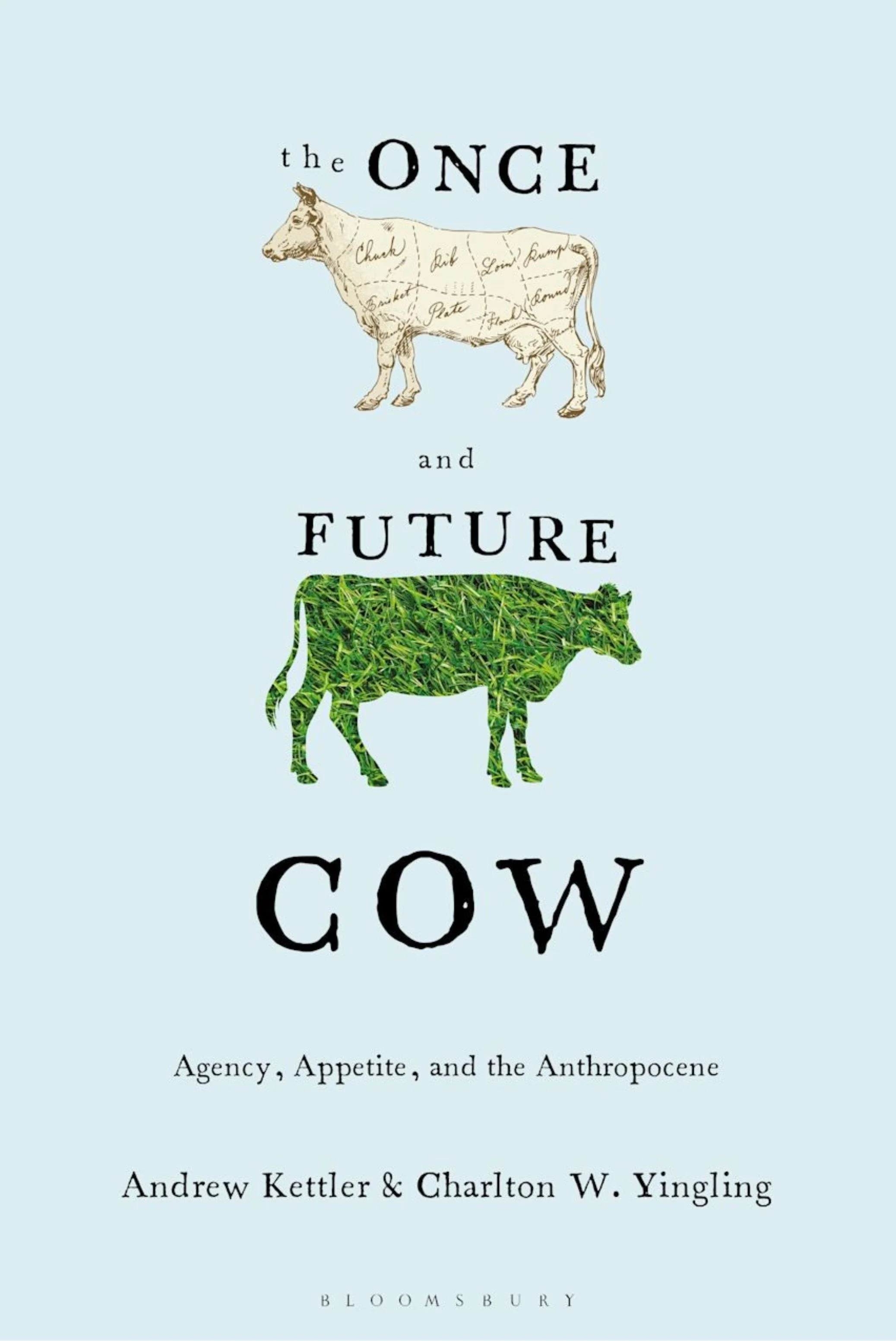
The Once and Future Cow: Agency, Appetite, and the Anthropocene is a co-authored book by Andrew Kettler and Charlton Yingling. Andrew is an Assistant Professor of History at the University of South Carolina and Charlton is an Associate Professor at the University of Louisville. Here's Andrew and Charlton to tell us more about early America's bovine past.
Tell us about your book in two or three sentences. What's the big story you're uncovering?
Most histories of cattle and agriculture focus on the American West. Instead, our research shows that the foundations of modern, global cattle agriculture were in the colonial Caribbean. As such, we refocus food and animal histories of the modern world onto a Caribbean past of slavery, sugar, and colonialism. This convergence gave rise to what we call the "meat and sweet" diet. In The Once and Future Cow, we explore how colonial contests changed human sensory and dietary preferences, which coincided with a rise in slavery, denial of animals' abilities, and all to supply increasing Atlantic commerce.
What first sparked your interest in this topic, and how did you come to work together on it?
We began this project during a graduate seminar that we both attended on the early modern Caribbean. Charlton had started a different animal studies project on dogs in the Americas. Our professor noted that little work had been done on a different animal related to the early Americas, the cow, so he suggested a new research topic. That was in 2013. Charlton and Andrew both remained interested in the rich ideas and sources of Charlton's first paper, and Charlton asked Andrew to join in and broaden the paper for an article. We returned to this topic on and off over the next decade, and it became a full book thanks to the depth of sources, conceptual intrigue, and connection to many pressing themes.
What's one surprising or little-known detail you discovered in your research?
One interesting detail is that cattle were sometimes driven into stampedes during battles in the early Caribbean. These large herds of cattle could easily and quickly overrun an opponent's position with minimal human life or ammunition expended. More broadly, the relationships between cattle agriculture and slavery, both in labor and in mutual reference–cattle, chattel slavery, and capital, which we explain more below–are profound and have been overlooked. We aim to remedy this throughout The Once and Future Cow.
Why does this story matter for understanding the early American past or the present?
Cattle shaped European colonies through connections with chattel slavery, in dietary demands of beef and sugar, and by participating in extensive ecological change. Cattle, chattel, and capital all originate from the Latin capitale, meaning "possession" or "stock." They reconverged in colonies of the early Americas. Though scholars have explored colonial settlement, sugar production, and slavery in great detail, they have not fully appreciated the role of cattle as related to all three. There are many reasons some stories are forgotten, and some of those reasons have to do with who benefits from keeping cattle – or animals in general – out of sight and out of mind.
If you could invite readers into one scene from your book, what moment would you choose and why?
We would like readers to think about the cases we explore of cattle struggling, running away, trampling barricades, eating crops, and displaying personality. They were also historical actors. Further, these actions prompted new forms of human colonization and control. These factors arose alongside new ideas of health and diet relating to the colonies. For example, some of these cultural ideas were reflected in an anecdote recounted by the jurist John Selden, in which a commander at Cádiz exhorted his troops: "What a shame will it be, you Englishmen, that feed upon good Beef and Brewess, to let those Rascally Spaniards beat you, that eat nothing but Oranges and Limons." Similarly, our book tracks changes in attitudes toward gluttony, eating mostly plants, and ideas of masculinity tied to meat.
What's one historical source, artifact, or place you'd recommend for readers who want to explore this topic further?
We suggest a new way of thinking about history as multispecies, not simply human. Looking into the historical record, evidence abounds of animals acting in ways that shaped human responses. Cattle are prevalent, sometimes even comically, in travel accounts from explorers and even pirates. One striking, early source comes from Thomas Gage, a Puritan traveler who advocated for English takeovers of Spanish colonies in a publication from the late 1640s. In his published accounts, one enticement to English audiences that he mentioned was the overwhelming number of cattle across islands of the early Caribbean, demonstrating the forgotten but disproportionate influence of cattle during this time.
Where can readers learn more about your work?
Charlton updates his academia.edu page and personal webpage with publications. Andrew posts publications and updates to his page on academia.edu. We also presented this work as part of the History Explorer’s Club.
You can purchase The Once and Future Cow at the Ben Franklin's World Bookshop, powered by bookshop.org. There, you can also find Andrew's first book, The Smell of Slavery: Olfactory Racism and the Atlantic World and Charlton's first book, Siblings of Soil: Dominicans and Haitians in the Age of Revolutions.
🎧 Go Deeper
Explore the history of animals and the environment in early America with these episodes of Ben Franklin's World:
🎧 Episode 369: Undra Jeter, Livestock & Animal Breeds in Early America
🎧 Episode 67: John Ryan Fischer, An Environmental History of Early California & Hawaii
🎧 Episode 168: Andrea Smalley, Wild By Nature: Colonists and Animals in North America
💬 Join the Conversation
How have animals shaped your life? And what animal in early America are you curious to learn more about?
💬 Join the conversation in our Listener Community.
❤️ Support Ben Franklin’s World
You power this newsletter—and the effort to keep history in the headlines. 👉 Support our work
📘 Affiliate Disclosure
Links to books in this email are affiliate links through Bookshop.org. This means that each purchase supports local, independent bookstores and helps sustain Ben Franklin’s World at no additional cost to you. Thank you for supporting history and the communities that keep it alive.