Jordan Smith, The Invention of Rum
Sugar was the defining commodity of the early modern Atlantic world. The sweetener and its byproducts dominated trade among the four continents that touch the Atlantic Ocean. Today we’re exploring one of those byproducts with a fascinating history: rum.
Jordan Smith joins us today with his new book, The Invention of Rum: Creating the Quintessential Atlantic Commodity. Jordan is an Associate Professor of History at Widener University. Here’s Jordan to tell us all about one of early America’s most notable beverages.
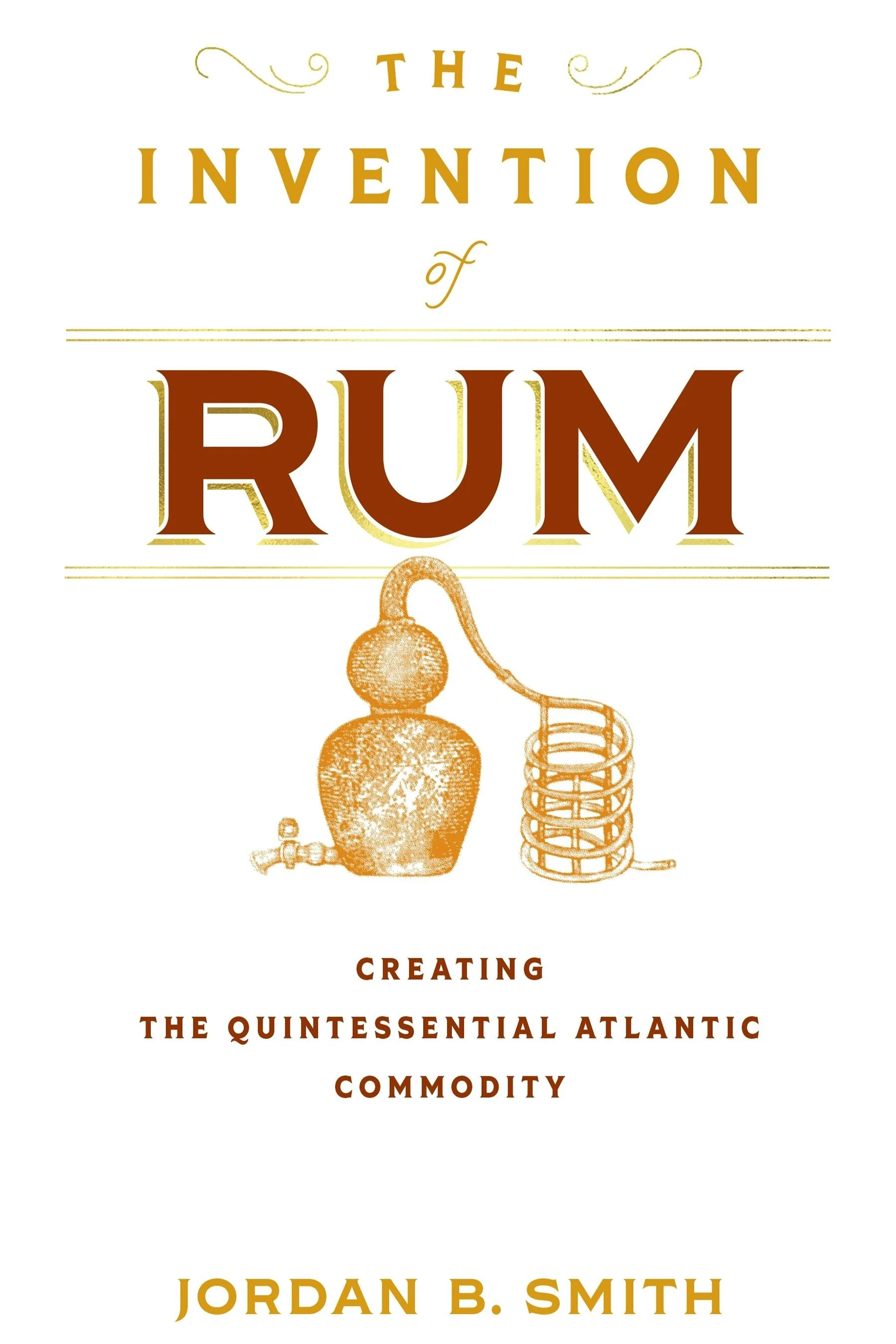
Tell us about your book in two or three sentences. What's the big story you're uncovering?
The Invention of Rum teaches readers how the byproducts of sugar manufacturing and imperfect sugar—once used as trash, animal fodder, or a cheap sweetener—were reimagined as the primary ingredient for a distilled spirit, rum.
Inventing rum rested on the creative collisions of many different groups of people living and working in the Caribbean, North America, Britain, and West Africa. Its emergence as something to make, to attempt to control, to buy and sell, and to drink significantly altered nearly every aspect of life in, and often beyond, Britain’s Atlantic world.
What first sparked your interest in this topic?
As an undergraduate, I wrote a senior thesis that presented Jamaica’s taverns as a space where a wide-ranging group of people including merchants, planters, privateers, and the free and enslaved men and women who staffed them would have interacted. After some time working in public history at a reconstructed eighteenth-century distillery, I decided that centering the product being hawked in those spaces could offer an even more expansive view of how people, goods, and ideas moved around the Atlantic world.
What's one surprising or little-known detail you discovered in your research?
I found it fascinating that early Americans confronted the logistical and moral challenges of consuming rum in the age of Atlantic revolutions by seeking out alternative ingredients for the drink. George Washington was a bit of a magnet for information on these commodity substitution efforts. In the 1770s, he engaged in conversations about corn stalk rum, and in the 1790s he tracked the potential of maple sugar rum. Thomas Jefferson even forwarded him brief tasting notes on the latter. It reminded him of whiskey!
I was also awestruck when I realized that Jamaican Maroons adapted an Akan word for rum—insa or nsā—that had been used for palm wine and then modified to also denote rum along the Gold Coast. This is a good reminder that while rum was initially created in the Caribbean, people made sense of it on their own terms. Sometimes rum was grafted onto existing structures and at other times inhabitants of the Atlantic world negotiated entirely new meanings and uses!
Why does this story matter for understanding the early American past or the present?
Individuals engaged in the work of making rum take center stage in The Invention of Rum. Enslaved Africans, Native people, and European-descended servants and wage workers contributed their labor to the invention and production of rum just as much as distillery owners and merchants did. This perspective highlights the contingencies of history. The invention of rum was not a foregone conclusion or an imposition from above, but rather a result of persistent tinkering by the varied makers and movers of rum. Turning refuse into something so desirable took work! I hope that I can encourage other scholars to (re)center experiences of work in their scholarship, and for all of us to continue recognizing people—rather than systems or even algorithms—as the source of new ideas.
If you could invite readers into one scene from your book, what moment would you choose and why?
It’s hard to pick just one! In the second chapter, I describe late-seventeenth-century Jamaica in a moment of social panic over how locally-produced rum was consumed—and by whom. One priest purportedly preached “o’er a lusty bowl of rum punch.” Lawyers were coming into court drunk. And the Jamaica council sought to criminalize markets where enslaved people bought and sold rum. When a devastating earthquake destroyed much of Port Royal in June 1692, critics quickly invoked the Biblical stories of Sodom and Gomorrah. Though this comparison predated the earthquake as a means to describe the sinfulness of British America’s largest city, in the aftermath of the natural disaster it became a way for some to understand the tragedy as part of God’s plan. I’m particularly struck by how events in Jamaica mirrored contemporary panics over drinking in places like England and North America. Atlantic history allows me to contextualize wide-ranging reactions to a common experience: the recent profusion of sugar-derived distilled spirits that nearly anybody could afford.
What's one historical source, artifact, or place you'd recommend for readers who want to explore this topic further?
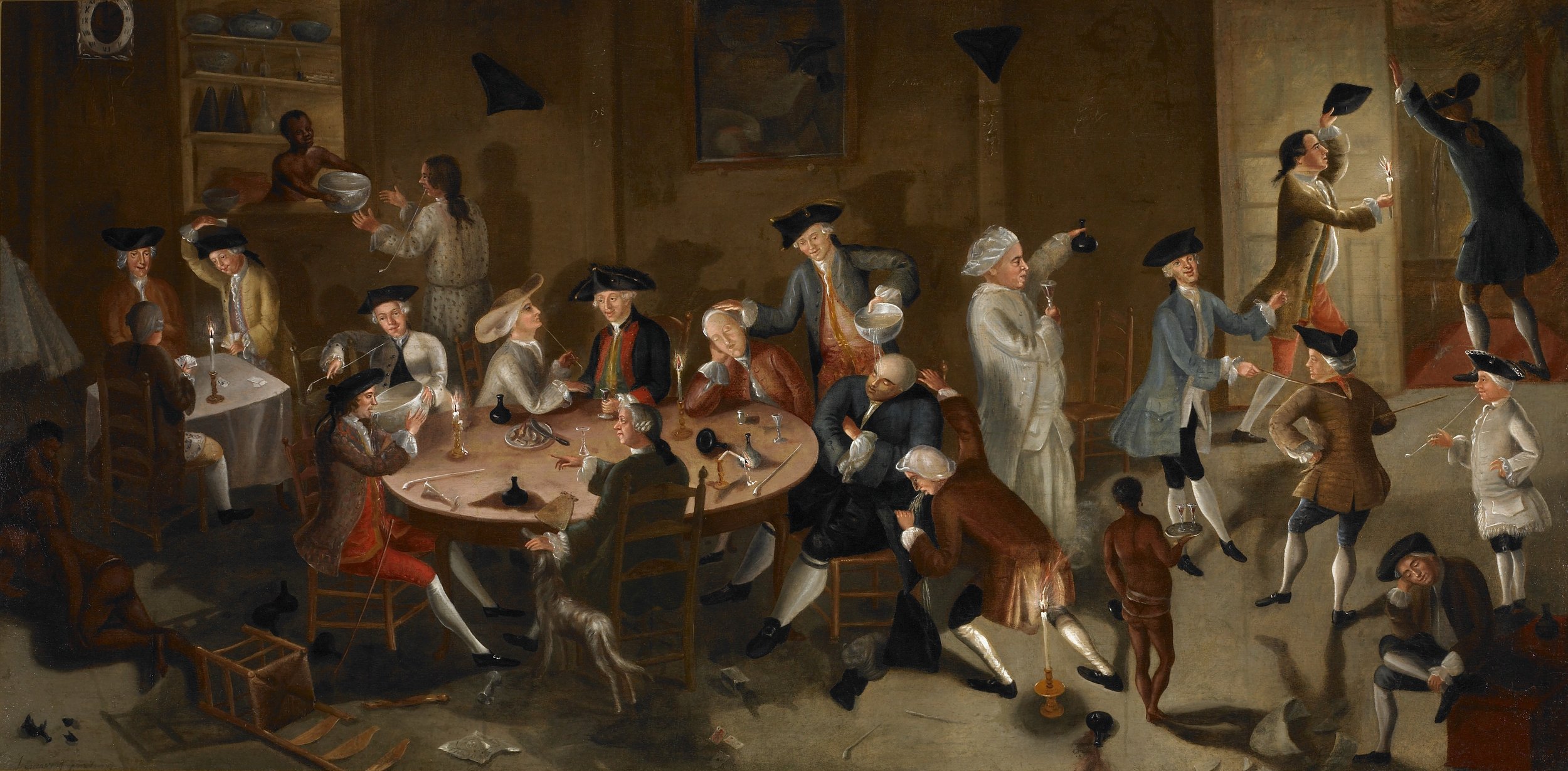
One additional place to look is a painting entitled Sea Captains Carousing in Suriname. It offers a view into an interconnected and rum-soaked Atlantic world. John Greenwood, the artist, painted real people, including himself. He’s the man vacating the night’s libations in the upper right corner! Several of the men depicted owned Rhode Island rum distilleries. One of the drinkers sitting around the table, Esek Hopkins, helped to shape two important outlets for American rum—the transatlantic slave trade and military provisioning.
Where can readers learn more about your work?
Sally Franklin’s Bookshelf readers can purchase the book directly from the University of Pennsylvania Press. You’ll receive 30% off the list price by entering the code PENN-JSMITH30 at checkout. Asking your local library to purchase the book is an even more cost-effective way to engage!
I have appearances planned at the University of Pennsylvania (April 1), the Institute of Thomas Paine Studies (April 15), Fort Ticonderoga (May 16), the Charles River Museum of Industry and Innovation (June 10), and the John Brown House Museum (June 11). I hope to add more as the opportunity arises.
If your book club or class chooses to read The Invention of Rum, please be in touch as I would gladly meet with your group!
You can also purchase The Invention of Rum through the Ben Franklin's World Bookshop, powered by bookshop.org.

🎧 Go Deeper
Explore early American food and drink with these episodes of Ben Franklin's World:
🎧 Episode: 429: Michelle McDonald, Coffee in Early America: Why Americans Really Drink Coffee
🎧 Episode 404: Diane M. Spivey, How Black Chefs Shaped Early America
🎧 Episode 160: The Politics of Tea
🎧 Episode 221: Rae Katherine Eighmey, The Culinary Adventures of Benjamin Franklin
❤️ Support Ben Franklin’s World
You power this newsletter—and the effort to keep history in the headlines. 👉 Support our work
📘 Affiliate Disclosure
Links to books in this email are affiliate links through Bookshop.org. This means that each purchase supports local, independent bookstores and helps sustain Ben Franklin’s World at no additional cost to you. Thank you for supporting history and the communities that keep it alive.