Peter Stark, The Lost Cities of El NOrte
Early American scholarship tends to focus on the thirteen British colonies along the East Coast, but long before the English arrived in Jamestown, the Spanish were delving into the heart of what is today the United States. These conquistadores entered Native lands looking for gold, but left far poorer than they had started. Today's guest highlights all the sides of Coronado’s infamous expedition.
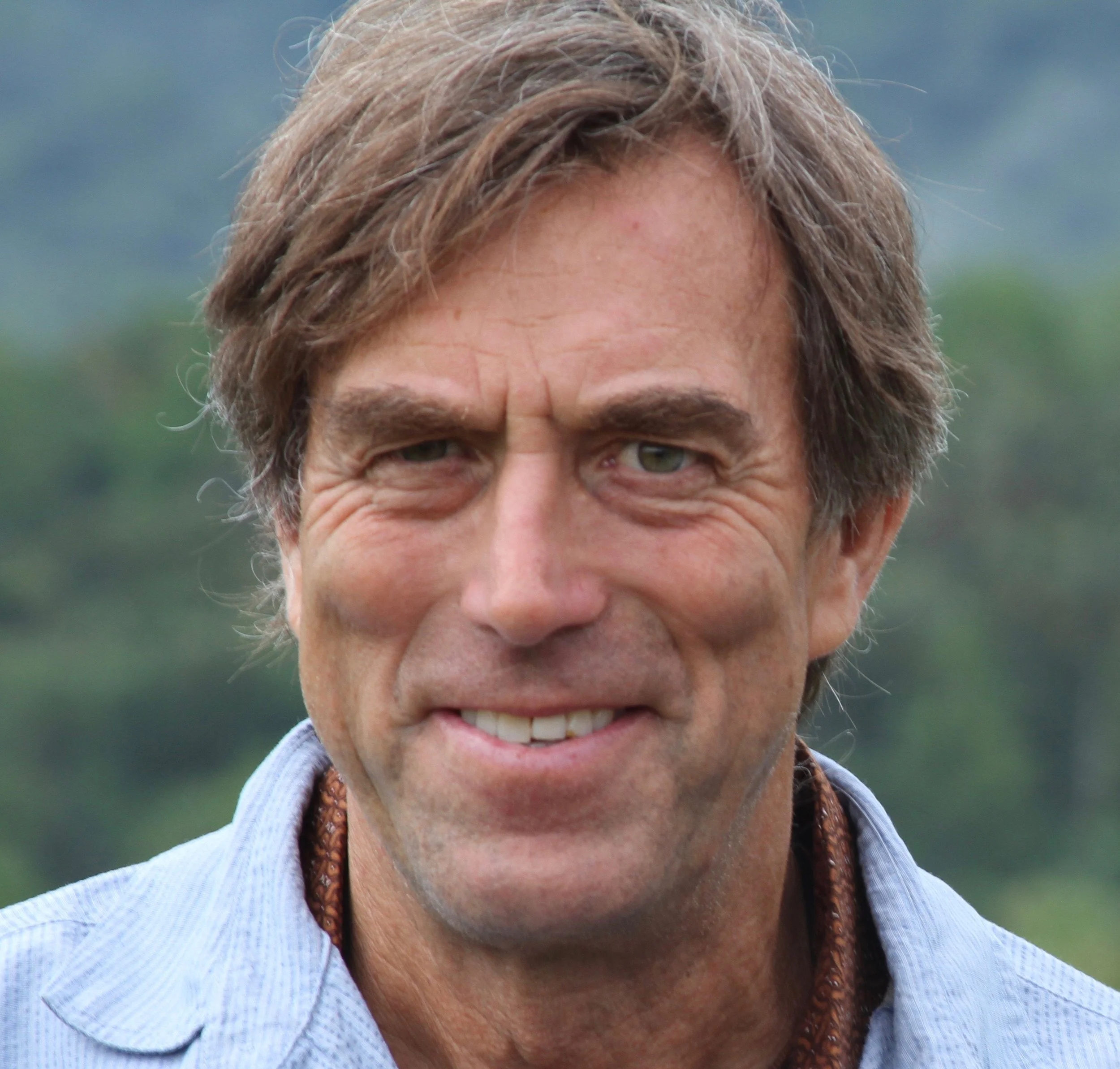
Peter Stark is a historian whose work has appeared in many publications, including Smithsonian and The New York Times Magazine. He is the author of several books that investigate the history of explorers and Native people, including his most recent one, The Lost Cities of El Norte: Coronado’s Quest, The Unconquered West, and the Birth of American Indian Resistance. Here’s Peter to take us back to the 1500s and this important chapter of early American history.
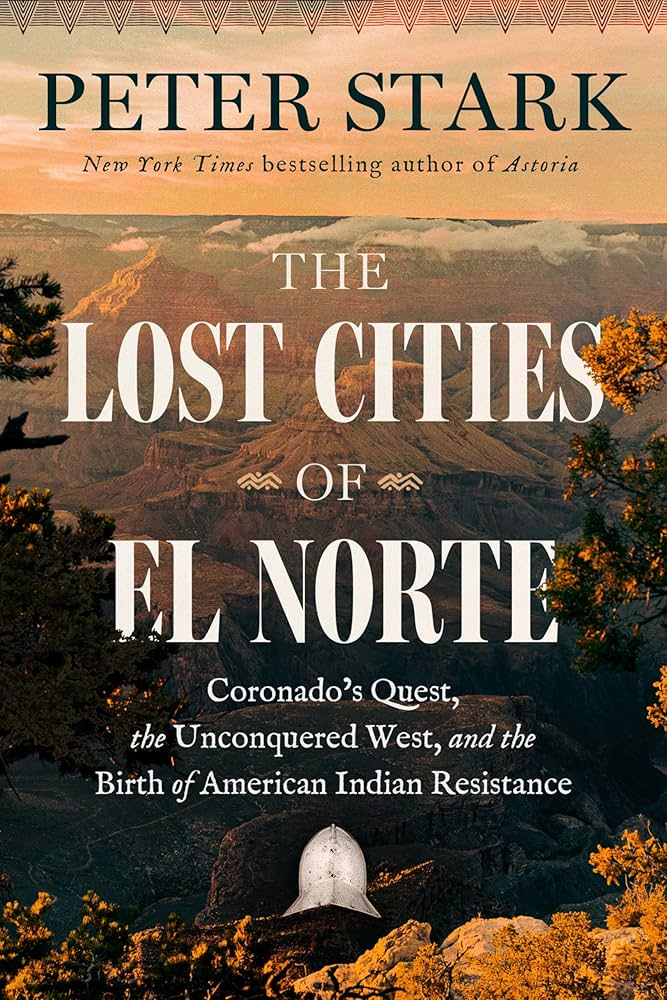
Tell us about your book in two or three sentences. What's the big story you're uncovering?
The big story is this: In 1540, nearly a century before the Pilgrims landed at Plymouth, a massive expedition led by Francisco Coronado pushed north from Mexico City, the former Aztec capital of Tenochtitlan that the Spaniards had recently conquered. Their goal was the rumored "Seven Cities of Gold" and the hope that they would find China and Greater India in the "Mysterious North." It was "the grandest expedition ever to set forth in the Indies to discover new lands," wrote chronicler and expedition member Pedro Castañeda de Nájera. This enormous column of three thousand fighters—armored horsemen, foot soldiers, and befeathered Aztecan warriors—ultimately was defeated by the sophisticated strategies of the Puebloan people and the harsh landscapes through which the expedition wandered.
What first sparked your interest in this topic?
My father had a passion for the history of the American frontier. I grew up in Wisconsin in a house built around an old Scandinavian settler's log cabin, and, from my father, was steeped in stories of these pioneer settlers and Woodland Indian tribes like the Potawatomi. When I first heard about the Coronado Expedition — I don't know if it was in grade school, high school, college anthropology, or possibly all three — I immediately wondered: How could the Spaniards possibly have pushed north nearly as far as Wisconsin, three hundred years before those first Scandinavian settlers arrived, and we hear so little about it? I could have grown up speaking Spanish!
What's one surprising or little-known detail you discovered in your research?
After carefully reading the expedition's journals in light of recent medical discoveries, I believe Coronado's decision to turn the expedition around resulted in part because he was suffering from CTE (chronic traumatic encephalopathy), the brain-injury disease increasingly diagnosed in former NFL football players. Like many of those afflicted modern-day players, five hundred years ago Coronado appears to have undergone a profound personality change following several heavy blows to the head, these coming from thrown Puebloan boulders and a galloping horse’s hoof.
Why does this story matter for understanding the early American past or the present?
Even in its failure, the Coronado Expedition profoundly shaped the geopolitical configuration of North America as it exists today. Ongoing resistance from the Puebloans and then other Native peoples thwarted Spanish colonization in the American West for the next three hundred years. This left a vacuum from European powers that helped open the way for Americans to eventually settle it.
You can measure it this way: It had taken British and then U.S. settlers two centuries to push from the Atlantic Coast to the Mississippi River. The lack of widespread Spanish colonization in the American West (despite Spain's efforts) eventually allowed U.S. westward movement to sweep from the Mississippi River to the Pacific Coast in less than fifty years.
If you could invite readers into one scene from your book, what moment would you choose and why?
I would love to place the reader (and myself!) in the scene opening the book, described in the Prologue. Here Coronado and his caravan of armored Spanish horsemen and Aztecan warriors come face-to-face with the Zuni people of today's western New Mexico. The moment is dazzling in the breadth of the cultural schism that separates the two groups, even though they are physically standing only a few feet apart separated by a line of cornmeal poured on the ground by Zuni priests.
What's one historical source, artifact, or place you'd recommend for readers who want to explore this topic further?
I highly recommend exploring either in person or from afar the Pueblos of today's New Mexico. These are vibrantly living cultures, with both traditional and modern identities, each distinct in its own way. Many of the Pueblos welcome visitors and offer guided tours, providing the tourists are respectful of the people and culture. They have thrived here for many, many generations. "There was always one place the Pueblo people called home. That's why they're so resilient," says Zuni and Laguna cultural educator Jon Ghahate.
Where can readers learn more about your work?
Readers can find more about my work and upcoming events on my author's website: peterstarkauthor.com. I'm on social media (Instagram, Facebook, Twitter/X) and an internet search of my name will turn up recorded talks I've given and other events.
You can also purchase The Lost Cities of El Norte at the Ben Franklin's World Bookshop.
🎧 Go Deeper
Learn more about the history of Spain and the American West with these episodes of Ben Franklin’s World
🎧Episode 387: Jean Pfaelzer, California and Slavery
🎧Episode 334, Brandon Bayne, Missions and Mission Building in New Spain
🎧Episode 115: Andrew Torget, The Early American History of Texas
🎧Episode 381: Martha Menchaca, Texas in the Spanish Empire
🎧Episode 241: Molly Warsh, Pearls & the Nature of the Spanish Empire