James O’Neil Spady, Take Freedom
Have you ever encountered a history mystery that you just couldn't let go? Maybe you wondered where an object came from or who wrote a tantalizing letter? Today's guest experienced just that, and then found an answer, all while researching the people and communities who experienced the Denmark Vesey Affair.
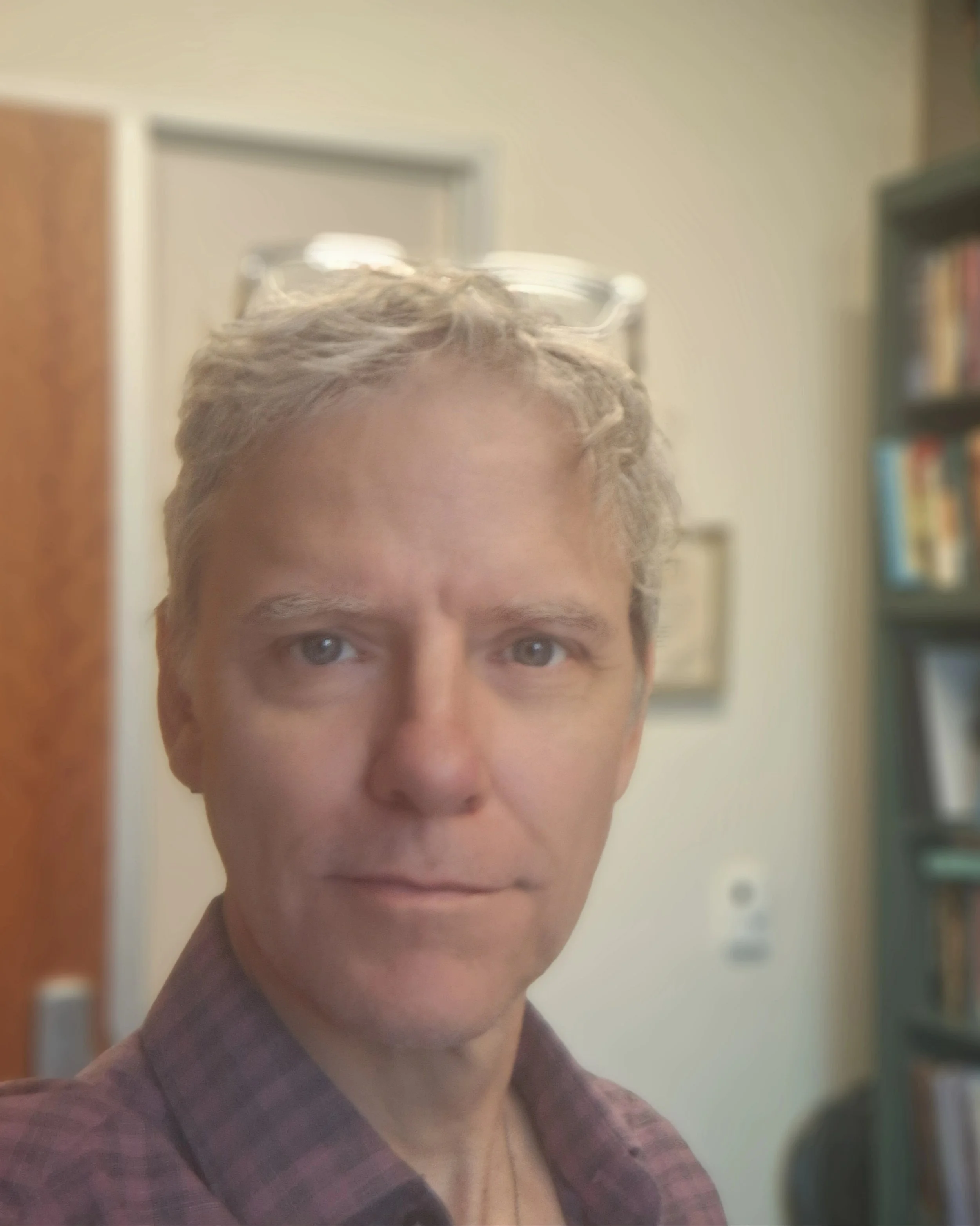
James O'Neil Spady is the author of the new book, Take Freedom: Recovering the Fugitive History of the Denmark Vesey Affair. James is an Associate Professor of American History at Soka University. Here's James to explain the mystery and tell us about the experiences of a nineteenth-century Lowcountry Black community.
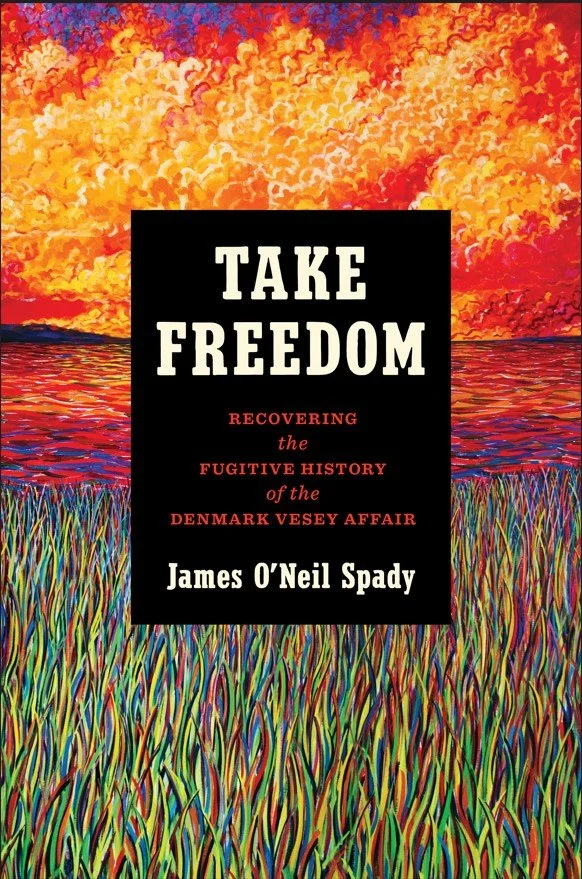
Tell us about your book in two or three sentences. What's the big story you're uncovering?
Take Freedom tells the story of the uprising at the center of the 1822 Denmark Vesey Affair with a new emphasis on the Africans, the leadership coalition, and the women involved. I created a detailed map of the city in 1822 that reveals the rebels’ tactical acumen in selecting targets and demonstrates the plausibility of their planning. For the first time, Take Freedom names the clerk who made the only existing copies of the tribunal's manuscript records and narrates how the existing documents were created. It is a story of a social movement in the Black Charleston community, which organized itself through friends and families. Such intimate, trusting relationships kept the dangerous plan secret for a long time. Slavers could intimidate, but they could not always break the deep bonds of affection and loyalty among the enslaved.
What first sparked your interest in this topic?
Skepticism about an argument historian Michael Johnson made in 2001. In an essay for The William & Mary Quarterly, he argued that the enslaved who gave statements to the investigators made up the entire story of the uprising movement in order to satisfy slavers who threatened to beat or kill them. It is not that Johnson seemed entirely wrong—there was some lying by the enslaved—but that he didn't account for power dynamics in sufficiently nuanced ways. I found it hard to believe that dozens of people would suddenly betray dozens of friends and acquaintances to the hangman motivated solely by the mercenary goal of attaining personal freedom. That seemed like a claim that required direct evidence. My skepticism grew when I studied the manuscript records. The enslaved man Joe LaRoche testified against an intimate, close friend but he also incriminated himself. Then I noticed that a lot of intimate relationships lay at the heart of the story, and I got intrigued. Would so many enslaved people lie, getting their closest friends and other associates hanged in exchange for freedom? I theorized they would more likely lie to protect their loved ones than report on them.
What's one surprising or little-known detail you discovered in your research?
Until now, no scholar has been able to identify the author of the manuscript trial records held by the state archive in Columbia. I was able to prove through direct evidence that a man named Christopher Jeannerett copied the documents from originals that have since been lost. He had no connection to the trial. He was a slaver but none of his enslaved property interests were directly affected by the trials. He was an accomplished clerk hired by South Carolina Governor Thomas Bennett. The Governor was a vocal critic of the court. I argue from physical evidence that Jeannerett's copies are precise representations of a chaotic original. This matters because it allows us to use the manuscript to cross-examine the official story published by the court and its allies. The official publications mostly confirm the story in the manuscript, with some significant differences that change how we must tell the story.
Why does this story matter for understanding the early American past or the present?
Take Freedom centers the local Black community in Charleston and the African diaspora. The book emphasizes that the enslaved desired freedom and dignity independent of the American Revolution's ideologies. Several of the people at the heart of the 1822 uprising were Africans, including Denmark Vesey in all probability. Whether born in North America or Africa, Black Charlestonians did not need the Declaration of Independence to desire freedom. In the white tribunal's records, we hear filtered bits of their own visions. Forced to live through abominable abuse, exploitation, and intimidation, they felt compelled to risk their lives to attain freedom for their fellows, their relations, and themselves. In 1822, their movement demonstrated the revolutionary potential of intimate bonds of affection and loyalty. African knowledge and American experiences informed their assertion of their dignity and motivated and structured their movement. And I do not think that these mobilization dynamics were unique to Black Charleston. Centering the knowledge, values, and loving relationships of rebels is an approach we could bring to other movements for freedom under slavery in the US and elsewhere.
strong>If you could invite readers into one scene from your book, what moment would you choose and why?
There are two moments—not just one. First, meals in Amaritta LaRoche's yard in Charleston. She was an enslaved woman who fed Joe LaRoche and Rolla Bennett. There, the two men talked about the uprising plan. It was also probably there in her yard that she likely relayed a message from the countryside to the town about the uprising at least once. Such scenes were all but ignored in the court's official story, and they have not been fully appreciated by historians. I discuss several such settings in which women became quite central to the story.
Second, gatherings of enslaved people behind the shops of the enslaved men Monday Gell and Gullah Jack. Their shops were next to each other and adjacent to the City Market, one of the busiest places in town. Yet these two men—neighbors—held insurrection meetings and relayed news of the planning in public in this market neighborhood teeming with white people. The market was so busy that small groups of enslaved men talking among themselves were not noteworthy. They hid in the open. In these two scenes, we get a view of how the movement built power through its social networks and mobilized on the basis of affection and trust.
What's one historical source, artifact, or place you’d recommend for readers who want to explore this topic further?
Read Take Freedom! But if we are talking about primary sources, get ahold of The Denmark Vesey Affair edited by Douglas R. Egerton and Robert L. Paquette. It is the definitive standard for historical documents on this topic. Although the documents identifying Jeannerett are not in the book, almost everything else is. Indispensable resource.
Where can readers learn more about your work?
I have a LinkedIn that is currently the best place to follow me on social media. Students of mine and I have launched a website—in collaboration with Dr. Bernard Powers of the Center for the Study of Slavery in Charleston—at mappingblackcharleston.org. The website updates the ArcGIS maps that informed the book. New research will appear there in ArcGIS maps and virtual tours. And the site will anchor a collaborative effort to take the teaching and sharing of the story into Charleston area schools, tourism, and higher education.
If you want to learn more, you can purchase Take Freedom from the Ben Franklin's World bookshop.
🎧 Go Deeper
Explore the many ways that Black communities in early America sought freedom with these episodes of Ben Franklin's World:
🎧 Episode 282: Vincent Brown, Tacky’s Revolt
🎧 Episode 289: Marcus P. Nevius, Maroonage & the Great Dismal Swamp
🎧 Episode 336: Vanessa Holden, Surviving the Southampton Rebellion
🎧 Episode 399: Jeremy Schipper, Denmark Vesey’s Bible
🎧 Episode 133: Patrick Breen, The Nat Turner Revolt
💬 Join the Conversation
James discovered the author of a historic document, what about you? Have you ever solved a history mystery or are you working on one right now?
💬 Join the conversation in our Listener Community.
❤️ Support Ben Franklin’s World
You power this newsletter—and the effort to keep history in the headlines. 👉 Support our work
📘 Affiliate Disclosure
Links to books in this email are affiliate links through Bookshop.org. This means that each purchase supports local, independent bookstores and helps sustain Ben Franklin’s World at no additional cost to you. Thank you for supporting history and the communities that keep it alive.