Edward Andrews, Newport Gardner’s Anthem
When Rhode Island legislators passed a gradual emancipation act in 1784, they echoed the Declaration's language that "all Men are entitled to Life, Liberty, and the Pursuit of Happiness." But what was life actually like for Black communities, and how did Black leaders navigate this complex world of imperfect liberty?
Today, Edward E. Andrews joins us to share his new book, Newport Gardner's Anthem: A Story of Slavery, Struggle, and Survival in Early America. Edward is a Professor in the Department of History and Classics at Providence College. Here's Edward to introduce us to Newport Gardner.
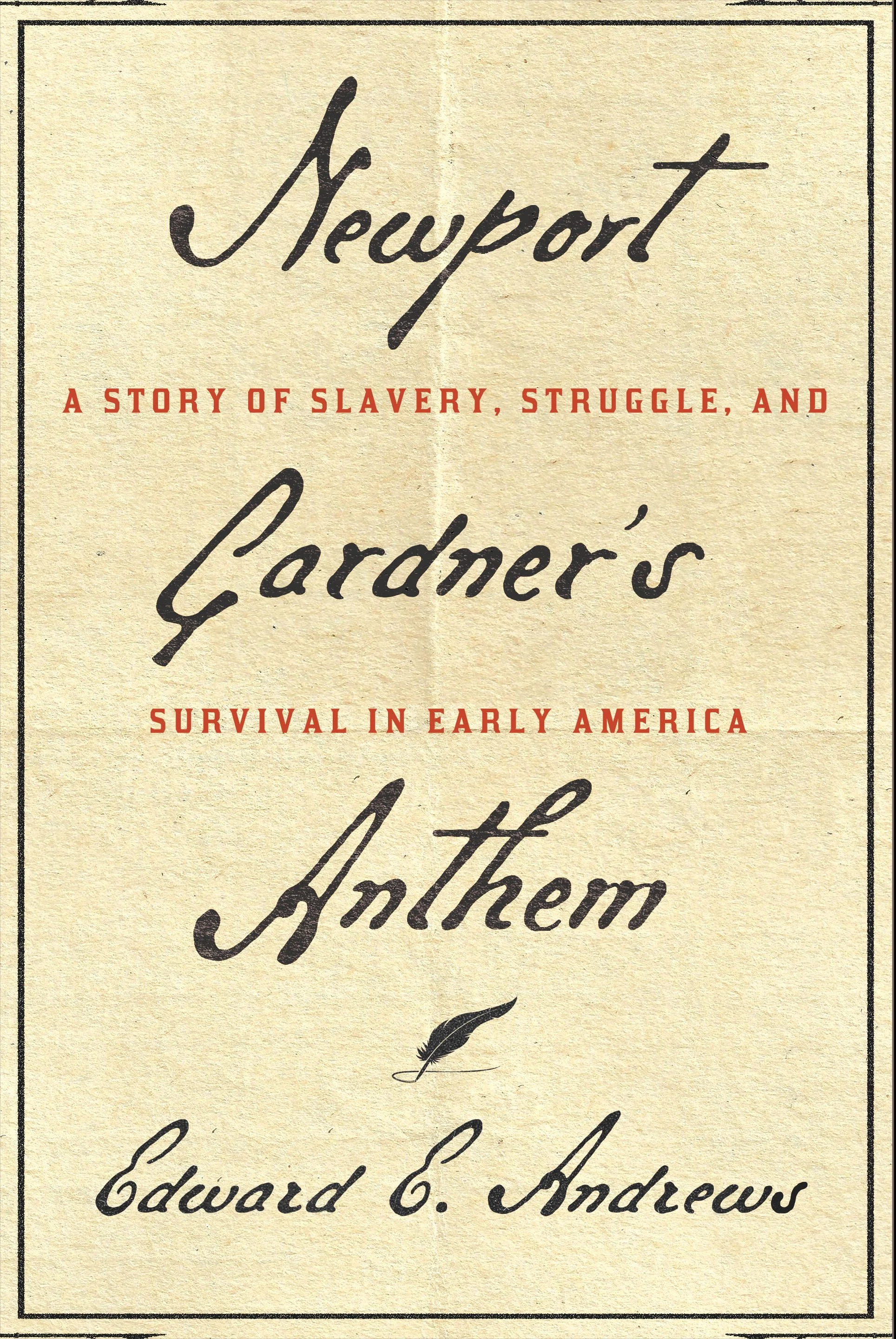
Tell us about your book in two or three sentences. What's the big story you're uncovering?
Newport Gardner's Anthem is about a forgotten but incredibly important Black leader in early America. Gardner, originally named Occramer Marycoo, was an enslaved African who was taken to Newport, Rhode Island in the middle of the eighteenth century when he was just a boy. After he acquired his freedom in the early 1790s, he became arguably the community’s most important Black leader, as well as a church-builder, organizer, activist, visionary, teacher, musician, supporter of Liberian emigration, and property owner. His life can tell us a lot about the struggle for freedom and opportunity in the most formative years of our nation’s past.
What first sparked your interest in this topic?
I initially wanted to write a book about the rise and fall of slavery in early Newport, Rhode Island. But as I went through the research process, the name "Newport Gardner" kept popping up, and I realized the book would be a lot more compelling if I wrapped it around his life and experiences, rather than the city in general. My first book, on Indigenous missionaries in the Atlantic world, was much broader both geographically and in terms of timeframe. In writing Newport Gardner's Anthem, I really tried to embrace the challenge of more intensive archival research; looking for needles in haystacks for one particular person.
What's one surprising or little-known detail you discovered in your research?
It's not so much a detail, but connecting with the question above, I was shocked by how much I found on Gardner. Most of my research was done at the Newport Historical Society, but I also worked in archives from Washington, D.C. to Boston, where I found manuscripts related to or about Gardner in a range of collections. I found court cases that shed light on his emancipation, pay stubs for his son’s work on a merchant voyage into Asia, and even the Articles of Faith for the church that Gardner helped to found in the mid-1820s, which give us a great sense of his religious sensibilities. I was amazed at how much I found once I started digging, but I also wouldn't be surprised if there's still more material out there.
Why does this story matter for understanding the early American past or the present?
I think Gardner's story is important for three main reasons. First, it illuminates his role as a neglected but significant and powerful Black figure in early America. Second, it showcases, through biography, the rise and fall of slavery in early New England as well as the possibilities and limitations of Black freedom in the new nation. And, finally, I hope it serves as an example of how deep archival research can highlight voices that have traditionally been marginalized or silenced.
If you could invite readers into one scene from your book, what moment would you choose and why?
I think I'd choose the scene I open the book with, in late 1825 and early 1826, on the eve of Gardner leading a group of free Black Rhode Islanders to Liberia. They first traveled up to Boston, where they were invited to participate in a bunch of different church services with local congregations. The biggest one was at Park Street Church, the iconic building near the corner of Boston Common, where the group was organized as a distinct "African church," choosing Gardner as their deacon. And to cap it all off, the celebration featured a song called "Promise Anthem," composed and performed by Newport Gardner himself. I think this moment captures the issues and initiatives that he found most important: musical composition, church building, social activism, and African emigration.
What's one historical source, artifact, or place you'd recommend for readers who want to explore this topic further?
I'd highly recommend that people navigate to the Newport Historical Society's online database, Voices from the NHS Archives. This comprehensive database, which took years to produce, is a catalogue of any mention of every person of color in early Newport. Users can certainly find materials about Newport Gardner there, but the Voices project shows that there are a lot of other biographies to be written, and many more stories to uncover, as well.
Where can readers learn more about your work?
Thanks for asking! Readers can check out my faculty page. The book can be found at the Cornell University Press website, where buyers can use the code 09BCARD for 30% off.
Interested folks can also listen to my episode on the Revolution250 Podcast with Robert Allison. They can also check out a virtual talk I gave with the Congregational Library and Archives.
Thanks for the chance to share my work on Sally Franklin's Bookshelf!
You can also order Newport Gardner's Anthem at the Ben Franklin's World bookshop.

Go Deeper
Explore Black history in early America with these episodes of Ben Franklin's World:
Episode 217: Jessica Millward, Slavery & Freedom in Early Maryland
Episode 328: Warren Milteer, Free People of Color in Early America
Episode 352: James Forten and the Making of the United States
Join the Conversation
What history that focuses on a single person, place, or moment would you recommend and why?
Join the conversation in our Listener Community.
Support Ben Franklin’s World
You power this newsletter—and the effort to keep history in the headlines. Support our work
Affiliate Disclosure
Links to books in this email are affiliate links through Bookshop.org. This means that each purchase supports local, independent bookstores and helps sustain Ben Franklin’s World at no additional cost to you. Thank you for supporting history and the communities that keep it alive.